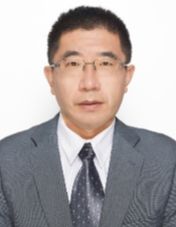
Dr. Lifeng Liu
Dongguan Institute of Materials Science & Technology, Chinese Academy of Sciences, China
Title: Hybrid seawater electrolysis for energy-saving hydrogen production
Abstract:
Seawater electrolysis is a promising approach to hydrogen production but faces formidable technical challenges in practical applications. In particular, the interfering chlorine evolution reaction (CER) not only competes with the oxygen evolution reaction (OER) at the anode compromising the Faradaic efficiency, but the chlorine and/or hypochlorite generated under high voltages and large current densities may corrode materials and components of electrolyzers, shortening their lifetime. Recently, hybrid seawater electrolysis has drawn considerable attention because it can help address the challenges mentioned above [1]. Hybrid seawater electrolysis takes advantage of the small molecule oxidation reaction (SMOR) to replace the energy-demanding OER. The coupling of SMOR with the hydrogen evolution reaction (HER) not only enables efficient production of hydrogen, but also allows for co-production of value-added chemicals/fuels or treatment of chemical/environmental wastes, substantially enhancing the economic viability of seawater electrolysis. Meanwhile, the SMOR typically occurs at a remarkably lower anodic potential than the OER, and therefore can significantly reduce the energy consumption of seawater electrolysis. Accordingly, the electrolyzer is able to operate at high current densities without the interference of CER. In this presentation, the speaker will give an overview about the research carried out in his team on hybrid seawater electrolysis, based on the methanol oxidation reaction (MOR) [2], urea oxidation reaction (UOR) [3], hydrazine oxidation reaction (HzOR) [4], sulfion oxidation reaction (SOR) [5], and formic acid oxidation (FOR) [6]. Besides performance in the aqueous model system, the speaker will also present results obtained in prototype hybrid seawater electrolyzers.
REFERENCES
1. Z. P. Yu, L. Liu, Adv. Mater. 36 (2024) 2308647
2. K. Xu, L. Liang, T. Li, M. Bao, Z. Yu, J. Wang, S. M. Thalluri, F. Lin, Q. Liu, Z. Cui, S. Song, L. Liu, Adv. Mater. 36 (2024) 2403792.
3. Z. P. Yu, Y. Li, V. Martin-Diaconescu, L. Simonelli, J. R. Esquius, I. Amorim, A. Araujo, L. Meng, J. L. Faria, L. Liu, Adv. Funct. Mater. 32 (2022) 2206138.
4. Z. P. Yu, G. D’Olimpio, H. Huang, C. N. Kuo, C. S. Lue, G. Nicotra, F. Lin, D. W. Boukhvalov, A. Politano, L. Liu, Adv. Funct. Mater. 34 (2024) 2403099.
5. H. Tan, Z. P. Yu, C. Y. Zhang, F. Lin, S. Ma, H. Huang, H. Li, D. H. Xiong, L. Liu, Energy Environ. Sci. 18 (2025) 1440.
6. K. Xu, C. Zhang, L. Yang, Y. Xu, B. Zeng, Q. Chen, B. Li, Y. Zhao, Z. P. Yu, H. Huang, W. Wang, L. Liang, S. Song, L. Liu, Adv. Funct. Mater. 35 (2025) e10268
Biography:
Lifeng Liu (Researcher ID: A-2522-2012, Orcid ID: 0000-0003-2732-7399) received both his MSc. (2004) and PhD (2007) degrees in Condensed Matter Physics from the Institute of Physics, Chinese Academy of Sciences (IOP-CAS). He joined Max Planck Institute of Microstructure Physics – Halle (MPI-Halle), Germany in 2007, first working as a postdoctoral researcher under the supervision of late Prof. Ulrich Goesele, and then as a staff scientist. He started his independent research career in 2008 and became a group leader at MPI-Halle in 2009. In 2011, he moved to the International Iberian Nanotechnology Laboratory (INL) and set up a research group there. After working in Europe over 15 years, he returned China in 2022 and joined Songshan Lake Materials Laboratory (SLAB) in Dongguan. In May 2026, he joined Dongguan Institute of Materials Science and Technology (DIMST), Chinese Academy of Sciences, where he now serves as Head of Department of New Energy Materials and Vice Director of Academic Council of DIMST. Lifeng has been actively working on nanomaterials and nanostructures since 2002, with particular emphases on fabrication and characterization of complex nanostructures and energy materials. His present interest mainly focuses on electrocatalysis and battery materials. So far, he has authored/co-authored more than 210 peer-reviewed papers in international peer-reviewed journals, which have been collectively cited 18000+ times, leading him to an h-index of 74 (Google Scholar, as of June 2026). In addition, Lifeng has been granted 9 EU/PCT/Chinese patents and delivered 70+ oral presentations at international conferences/workshops. Besides, Lifeng has offered extensive professional services to the community. He actively serves as a reviewer for 70+ scientific journals and for grant applications of 10+ funding agencies from Europe, North America and Asia. He served as a chair/co-chair of several international conferences and workshops and was a member of the organizing/scientific committee of several national/international conferences. Since 2011, Lifeng has successfully secured internal and external research funds of ~8 million Euros. Lifeng Liu was the recipient of the FCT Investigator Grant 2014, Young Researcher Prize of the Portuguese Electrochemical Society 2015, the IAAM Scientist Medal 2018 by the International Association of Advanced Materials, and Emerging Investigator 2019 by the Royal Society of Chemistry journal "Chemical Communications". From 2020 to 2025, he was enlisted the world Top 2% scientist by Standford University. Lifeng is now an Editorial Board member of Materials Today Energy, Materials Futures, Advances in Nano Research and Applied Research.