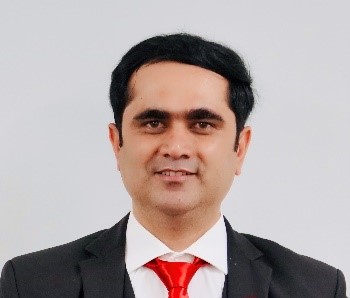
Dr. Salamat Ali
School of Materials and Energy, Lanzhou University, China
Title: From Conventional Batteries to Supercapacitors: Complementary Roles in Addressing the Limitations of Sustainable Energy Storage
Abstract:
Rising energy demand drives a shift from fossil fuels to renewables. Batteries are the cornerstone of electrochemical energy storage, offering high energy density for electronics, EVs, and grid integration. However, limitations in charging speed, cycle life, thermal stability, and material sustainability are steering research toward alternatives. Supercapacitors (SCs) have emerged as a complementary technology, distinguished by superior power density and exceptional operational longevity. Specifically, SCs offer higher power densities than batteries, alongside virtually unlimited cycling stability with minimal capacitance degradation. These attributes render SCs indispensable for applications demanding rapid energy transfer and frequent cycling, such as regenerative braking in EVs, frequency regulation in smart grids, and industrial power stabilization. Yet conventional SCs face an energy density gap. This presentation will also examine recent advances in electrode materials and device architectures aimed at bridging this divide.
Biography:
Salamat Ali is a Postdoctoral
Fellow at the School of Materials and Energy, Lanzhou University. He received
his Ph.D. from the School of Materials and Energy from Lanzhou University,
China, in 2025. His research focuses on supercapacitors and batteries, with
expertise in both experimental electrochemistry and density functional theory
(DFT) simulations using the Vienna Ab-initio Simulation Package (VASP).
He obtained his master’s degree in physics from the University of Electronic
Science and Technology of China (UESTC) in 2019. Dr. Ali has published over 50
SCI-indexed research papers and actively serves as a reviewer for several
international journals.