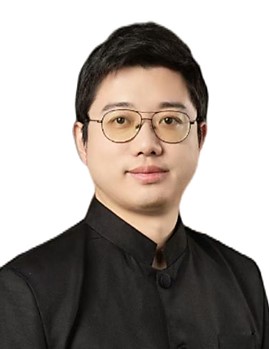
Prof. Zhuojia FU
Hohai University, China
Title: Cavity-nested seismic metamaterials for low-frequency broadband surface-wave attenuation
Abstract:
Seismic metamaterials provide a promising strategy for improving the seismic safety of near-surface structures. However, achieving low-frequency broadband attenuation while maintaining convenient engineering assembly remains a major challenge. In addition, variations in structural parameters can significantly affect the practical attenuation performance of seismic metamaterials, while high simulation costs and complex multiparameter coupling further increase the difficulty of inverse design. To address these issues, a cavity-nested seismic metamaterial driven by the synergy between multilayer nesting and multicavity regulation is proposed in this study. This structure combines the convenience of layer-by-layer assembly with low-frequency broadband surface-wave attenuation. Furthermore, an Agent-guided Global Collaborative Optimization framework is developed. In the global optimization process, an agent decision mechanism is introduced to adaptively adjust the parameter update direction, thereby improving the accuracy and efficiency of inverse design for complex multiparameter structures.
Biography:
Dr. Zhuojia Fu is currently a full professor in the College of Mechanics and Engineering Science of Hohai University in Nanjing, China. He received his B.S. and Ph.D. degrees from Hohai University. His studies are focused on Computational Mechanics and Engineering Simulation including Green’s function method, Scientific Machine Learning and so on. He is the PI of four NSFC projects. He published 100 plus peer-reviewed journal papers and 2 monographs, and his current H-index is 28. He has been awarded Humboldt Fellowship, DAAD Fellowship, ICACM Young Investigator Award, and he was selected as the Elsevier Most Cited Chinese Researchers and World’s Top 2% most-cited scientists by Stanford University. He is the General Committee Member of ICACM, the Committee Member of CACM. He is now the Associate Editor of Engineering Analysis with Boundary Elements.