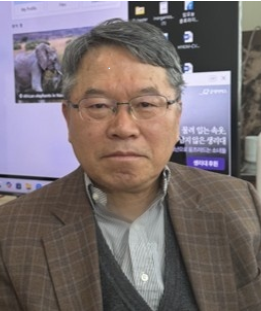
Prof. Hak Yong Kim
Jeonbuk National University, Republic of Korea
Title: High Performance Cathode Materials and Separator for Lithium-Sulfur Battery
Abstract:
The slow
kinetics of complex multiphase reactions and the strong shuttling effect of
lithium polysulfides (LiPSs) limit the practical use of lithium-sulfur (Li-S)
batteries, which are promising for future energy storage systems. To address
these challenges, I introduce a novel Co9S8
array derived from a metal-organic framework (MOF), offering excellent
electrical conductivity and vertical nanoarchitecture. This array is fabricated
on a Celgard separator and integrated with indium (III) phthalocyanines (InPc) using
a solution reaction technique, creating a robust barrier against LiPSs. The
vertical MOF Co9S8@InPc array acts as a versatile polar
barrier, providing a large surface area, mechanical stability, and enhanced
efficiency in LiPS sequestration through chemical and physical interactions.
Additionally, we present a cathode material composed of a mesoporous hollow
carbon nanostructure, featuring an in situ-grown nitrogen-doped graphitic
carbon nanoshell (NGCNs) matrix and cobalt nanoparticles as an effective sulfur
host. The MOF-based synthetic approach yields a carbon scaffold with a hollow
core and mesoporous shell, without the need for surfactants or templates. The
Co@NGCNs/S composite electrode enables high sulfur loading, and Li-S cells with
the MOF Co9S8@InPc-Celgard separator exhibit exceptional
electrochemical performance. Specifically, the Li-S battery with MOF Co9S8@InPc-Celgard/Co@NGCNs/S
achieves a discharge-specific capacity of 1325 mAh g⁻¹ at a 0.1 C rate and
demonstrates robust cycling stability, highlighting its potential for practical
applications.
Keywords: Polysulfides, metal-organic framework,
indium (III) phthalocyanines, mesoporous, hollow carbon, and specific capacity
Biography:
Professor Hak Yong Kim is a scholar who has revolutionized fiber and nanomaterials research over a prolific 40-year career. A pioneer in commercialization, he developed South Korea’s first biodegradable sutures in 1996—the third in the world—and achieved the first mass-production of ultrafine nanofibers in 2001. His industrial impact is massive, with over 105 global patents and technology transfers generating billions in revenue across 40 countries.
Academically, Professor Kim has published 581 SCI(E) papers in top-tier journals like Advanced Energy Materials, maintaining an exceptional h-index of 109 and over 45,840 citations. His contributions have earned him prestigious honors, including the Jang Young-Sil Award and the Minister of Trade, Industry, and Energy Award.
Currently at Jeonbuk National University, he focuses on Li-S/Na-S all-solid-state batteries, CO₂ reduction, and 6G EMI shielding. His proprietary roll-to-roll manufacturing process for CNT-grown carbon nanofibers represents a significant leap for the energy and electronics sectors. An alumnus of Seoul National University (PhD/MS) and Jeonbuk National University (BS), Professor Kim continues to bridge the gap between creative academic excellence and global industrial advancement.