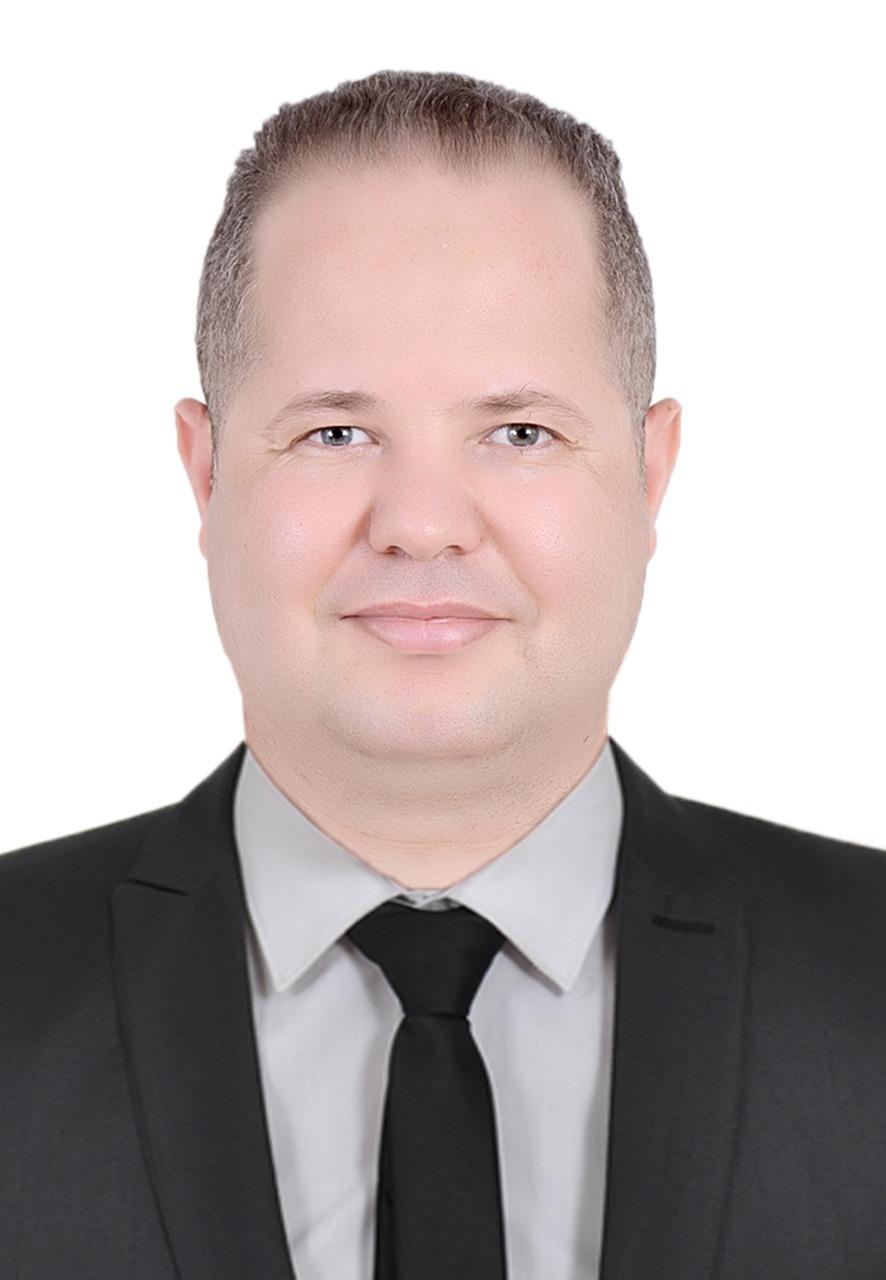
Prof. Mohamed Abbas
North Alabama International College of Engineering and Technology, Guizhou University, China, and National Research Centre, Egypt.
Title: Innovative Ultrasonication Approach for Efficient Heterogeneous Catalyst Synthesis: Applications in Hydrogenation and Methane Cracking reactions
Abstract:
The development of high-performance
heterogeneous catalysts with optimal activity and selectivity remains a central
challenge in environmental and energy-related catalysis reactions. This
presentation introduces a green ultrasonication-assisted approach as a powerful
and versatile method for the synthesis of advanced catalytic materials. The
fundamental principles of sonochemistry will be discussed, with particular
focus on the acoustic cavitation phenomenon and its role in catalyst formation.
The talk will explain the dual physical and chemical effects generated during
ultrasonication and how they enhance reaction kinetics and promote the
formation of highly active catalytic structures.We will demonstrate the
application of this ultrasonic methodology in synthesizing a diverse range of
catalytic structures, including mono- and bimetallic nanoparticles, as well as
sophisticated core/shell architectures with different size and shapes. The
superior performance of these catalysts will be showcased through several key
catalytic processes. First, their efficacy will be highlighted in hydrogenation
reactions, specifically the conversion of esters and dimethyl oxalate to
high-value products such as ethanol and ethylene glycol. Second, the
application in Fischer-Tropsch synthesis (FTS) will be discussed, underscoring
enhancements in product selectivity. Finally, we will present a compelling
application in sustainable energy: the use of these catalysts for methane
cracking to co-produce hydrogen and valuable carbon nanotubes, providing a
promising route for COx-free hydrogen generation. This work underscores the
profound impact of ultrasonic synthesis in overcoming traditional limitations
in catalyst design, paving the way for more efficient and sustainable catalytic
processes in energy and environmental applications .
Biography:
Prof. Mohamed Abbas received his Ph.D. in
Emerging Materials Science from DGIST, South Korea, in 2016. He has built an
extensive international research career, holding academic and research
positions at leading institutions worldwide, including the University of
Connecticut (USA), Tohoku University (Japan), Chungnam National University and
Korea Institute of Science and Technology (South Korea), the University of
Toulouse (France), the Institute of Coal Chemistry–Chinese Academy of Sciences
(China), Jagiellonian University (Poland), and the National University of
Singapore (Singapore). He is currently a Professor at the North Alabama
International College of Engineering and Technology, a joint China–USA program
at Guizhou University, and is also affiliated with the National Research
Centre, Egypt.
Prof. Abbas is a recipient of several prestigious international
fellowships and awards, including the PIFI (CAS, China), KRF, South Korea, and
the Ulam project (NAWA, Poland), etc. His research focuses on advanced
heterogeneous catalysis, particularly sonochemical catalyst design for
hydrogenation processes, Fischer-Tropsch Synthesis (FTS) and methane cracking reaction
for sustainable hydrogen and carbon nanomaterials production. He has published
over 60 peer-reviewed articles in high-impact international journals such as
Chemical Engineering Journal, Applied Catalysis B: Environment and Energy,
Ultrasonics Sonochemistry, Journal of Catalysis, Fuel, Journal of Materials
Chemistry A, Fuel Processing Technology, International Journal of Hydrogen
Energy, Dalton Transactions, etc.