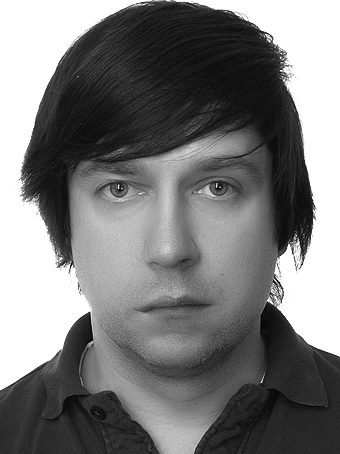
Prof. Sergei Zhevnenko
National University of Science and Technology MISIS, Department of Physical Chemistry, Russia
Title: Materials Science in a Drop: Studying High-Temperature Properties through Capillary Dynamics
Abstract:
This lecture presents an integrated experimental and theoretical framework for studying high-temperature capillary phenomena using molten droplets as dynamic micro-reactors and sensors. The approach centers on the analysis of droplet shape evolution—during free flight, upon impact with solid surfaces, and during infiltration into porous substrates—to quantify critical physical properties and interfacial interaction kinetics. The methodology combines specialized high-vacuum systems with high-speed video and thermal imaging, enabling direct observation of transient processes at elevated temperatures. The oscillation dynamics of a freely falling droplet provide simultaneous determination of surface tension and viscosity. Subsequent droplet-substrate interaction—characterized by spreading kinetics and temporal wetting angle evolution—yields data on wetting behavior, work of adhesion, and underlying mechanisms of energy dissipation. Furthermore, the lecture will detail how droplet imbibition into porous media allows for the quantification of infiltration kinetics, a process vital for numerous chemical and materials synthesis technologies. Post-solidification analysis of the droplet and the affected substrate zone via electron microscopy and X-ray spectroscopy reveals the phase and chemical transformations induced by brief, high-temperature contact. Original techniques for direct measurement of high-temperature capillary interactions will be introduced. Their application will be demonstrated through case studies ranging from chemically inert model systems (e.g., Cu-W, Ag-Fe) to highly reactive multicomponent systems (e.g., Ag-Ti, Cu-MAX-phase composites such as Cu-Ti₂AlN). The presentation will argue that the "life cycle" of a single droplet—from formation and oscillation to spreading and infiltration—encapsulates a wealth of quantitative information, establishing it as a powerful probe for fundamental materials science and applied process design.
The research was carried out with the support of the Ministry of Science and Higher Education of the Russian Federation within the framework of the State Assignment FSME-2023-0007
Biography: