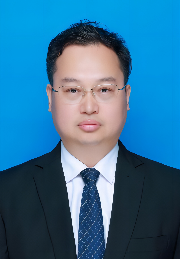
Prof. Jing-xiao ZHANG
School of Economic and Management, Chang'an University, China
Title: Forecasting Carbon Price Based on Multi-Source Data Feature Fusion: From a Text Sentiment Perspective
Abstract:
Carbon
emission allowances, as the primary trading product in carbon markets, possess
unique attributes. Their transaction prices serve as benchmark prices for
carbon finance activities and aid in monitoring volatility risks within carbon
trading markets. However, national policies and events in related markets can
exert complex influences on carbon emission allowance trading prices. To
capture these difficult-to-quantify unstructured textual insights and enhance
the accuracy of carbon emission allowance price forecasting, this paper
proposes a multi-source data feature fusion prediction model incorporating
cross-attention mechanisms through the BERT-BiGRU-CNN-LSTM-CrossAttn multi-path
feature channel. This model comprehensively integrates structured trading data
and unstructured carbon text information influencing prices. Utilising
historical carbon emission rights transaction data, relevant market
supply-demand indicators, macroeconomic indicators, environmental climate
metrics, and related news headlines as source data, it employs the BERT
(Bi-directional Encoder Representations from Transformers) model for sentiment
feature analysis. A combination of recurrent neural networks and convolutional
neural networks—BiGRU (Bidirectional Gated Recurrent Unit, BiGRU)-CNN
(Convolutional Neural Network, CNN) modules to extract numerical and textual
features respectively. An LSTM (Long Short-Term Memory, LSTM) model
incorporating a dynamic feature weighting mechanism is employed to forecast
carbon emission trading prices. Empirical research was conducted using data
from 2,506 trading days at the Hubei Provincial Carbon Emission Trading Centre
between 2 April 2014 and 14 February 2025. Results indicate that incorporating
textual features, sentiment features, and cross-attention mechanisms
simultaneously significantly enhances prediction accuracy across various
feature mechanism schemes. Furthermore, the predictive capability demonstrates
clear advantages across different pilot cities and time windows.
Biography:
Professor Zhang Jingxiao, Ph.D. in
Engineering, is a doctoral supervisor at the School of Economics and
Management, Chang'an University. He has extensive international academic
experience, having served as a visiting scholar at Iowa State University in the
United States, Queensland University of Technology in Australia, and London
South Bank University in the United Kingdom. His research focuses on
cutting-edge interdisciplinary fields, including digitalization and AI
decision-making, artificial intelligence and project management, and
engineering project organization and decision-making.
As
first or corresponding author, Professor Zhang has published more than 200
academic papers, with over 80 appearing in prestigious international SCI, SSCI,
and A&HCI journals. He has received numerous academic honors, including
being selected for the Shaanxi Sanqin Talents Special Support Program (Leading
Talent in Philosophy and Social Sciences), the Ministry of Transport Young
Science and Technology Talents Development Program, and the Shaanxi Provincial
Outstanding Young Talents Support Program for Universities. Beyond his academic
roles, he serves as a Legislative Consultant to the Standing Committee of the
14th Shaanxi Provincial People's Congress and Chief Expert of the
Decision-making Advisory Expert Team of the Shaanxi Association for Science and
Technology.