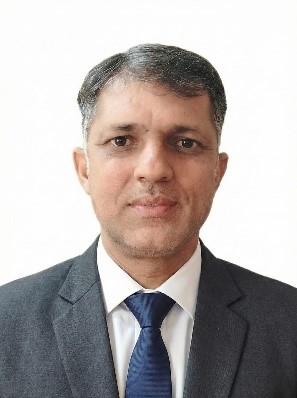
Prof. Farman Ali Chandio
Sindh Agriculture University, Tandojam, Pakistan
Title: Innovative Approaches to Soil Structure Assessment through Smart Agricultural Technology and Equipment in Tillage Practices and Cropping Systems
Abstract:
Global food security remains a critical
challenge as the world’s population continues to rise, necessitating a 70%
increase in agricultural production by 2050. Innovative agricultural
technologies, including smart equipment and precision agriculture, can play a
vital role in enhancing productivity. This study focuses on the assessment of
soil structure using advanced agricultural technologies under different tillage
practices and cropping systems in Tando Allahyar, Sindh, Pakistan. The research
aims to understand how modern tillage practices, coupled with smart
agricultural tools, impact soil quality, soil organic matter (SOM), and
aggregate stability (AS), ultimately improving crop productivity. The experimental design included a detailed soil
survey where soil samples were collected from various fields at depths of 0-30
cm. GPS devices were used to capture the geographical coordinates, and soil
samples were analyzed for key parameters such as Mean Weight Diameter (MWD),
SOM, and AS. The use of Geographic Information Systems (GIS) and Inverse
Distance Weighted (IDW) spatial analysis enabled the creation of detailed soil
maps to illustrate the spatial variability of these properties under different
tillage practices. This research leveraged smart agricultural tools, including GIS
based precision survey and data collection for spatial analysis and mapping of
soil structure through field collected data, which highlighting the role of
technology in enhancing agricultural outcomes. The results showed significant variability in
soil structure across the study area, influenced by the type of tillage
practice and cropping system. Under conservation tillage for the wheat-cotton
(W-C) and wheat-maize (W-M) cropping systems, MWD values ranged from 0.37 to
2.97 mm with an average of 1.58 mm. Conversely, conventional tillage practices
exhibited a lower range, with MWD values from 0.21 to 2.25 mm. Conservation
tillage also improved AS, with values ranging from 11.2% to 62.5%, while
conventional tillage showed lower AS values, from 2.2% to 59.1%. The study found that conservation tillage
practices, combined with modern agricultural tools, resulted in better soil
aggregation and higher SOM levels. SOM under conservation tillage for W-C and
W-M cropping systems reached maximum values of 1.38% and 1.26%, respectively,
compared to lower values under conventional tillage practices. The
incorporation of crop residues and the use of smart equipment to manage soil
more efficiently contributed to improved soil quality. Farmers who adopted
precision agricultural technologies, such as smart sensors and GPS-based
equipment, demonstrated enhanced soil health and crop yields due to better soil
management. Furthermore, the
integration of smart agricultural technologies, including automated soil
monitoring systems, helped in the timely application of fertilizers and
irrigation, which improved the SOM and AS in the fields. These innovations are
crucial for sustainable agriculture in arid and semi-arid regions like Tando
Allahyar, where water scarcity and soil degradation pose significant
challenges. In conclusion, this
study underscores the importance of adopting smart agricultural technologies
and innovative equipment for improving soil structure and productivity.
Conservation tillage, when combined with advanced agricultural tools, provides
a sustainable solution for maintaining soil health, enhancing crop yield, and
ensuring long-term agricultural sustainability. The findings suggest that
precision farming technologies can help farmers make informed decisions, thus
improving resource efficiency and mitigating the adverse effects of climate
change on agriculture.
Biography:
Prof. Dr. Farman Ali
Chandio is a distinguished academician, researcher, and agricultural engineer
currently serving as Professor (BPS-21) and Chairman of the Department of Farm
Power & Machinery, Faculty of Agricultural Engineering & Technology (FAET),
Sindh Agriculture University, Tandojam. He earned his PhD in Agricultural
Mechanization Engineering from Nanjing Agricultural University (NJAU), China
(2013) on a Chinese Government Scholarship, and completed a Post-Doctoral
Fellowship at Jiangsu University, China (2017–2019) under the Young Scientist Program.
He also holds a Fellowship from INTI University, Malaysia, and his M.E. and
B.E. degrees from SAU Tandojam all with distinction.
With a career spanning
over two decades from Lecturer (2008) to Professor and Chairman Dr. Chandio has
established himself as one of Pakistan's leading experts in soil-machine
interaction, tillage engineering, precision seeding, irrigation systems,
post-harvest technology, and UAV-based crop management. He has authored over 69
research publications with 2,570+ citations in high-impact SCI journals
including Computers and Electronics in Agriculture, Journal of Environmental
Management, and Water Resources Management, with collaborations across China,
Malaysia, Egypt, the USA, and the UK. An HEC-Approved PhD Supervisor and Life
Member of the Pakistan Engineering Council (PEC No. AGRI/2416), his work
reflects a deep commitment to advancing sustainable agricultural mechanization
and bridging the technology gap between Pakistan and global leaders such as
China.