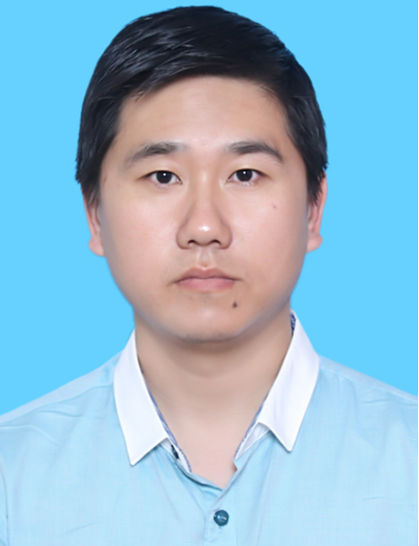
Prof. Xin Nie
School of Computer Science and Engineering, Wuhan Institute of Technology, China
Title: Innovative Applications of Machine Vision Techniques in Industrial Product Inspection
Abstract:
Machine vision technology has revolutionized industrial product inspection by enhancing accuracy and reliability. Advanced applications in detecting lithium battery electrode defects, analyzing chip porosity, and inspecting BGA defects have been explored. Integration of machine vision with deep learning and graph convolutional networks offers new strategies for high-precision quality control in industrial settings. The development of specialized algorithms and models has been a key focus in this field. For instance, the application of an innovative X-ray image enhancement algorithm based on MSR and RPCA has significantly improved image clarity for lithium battery inspection. Additionally, the use of the LBPEDNet network has enabled precise detection of pole-piece endpoints in lithium batteries. Furthermore, the ASTM-DGCN model has been employed for industrial robot posture prediction. These advancements address challenges such as poor imaging quality and limited computing resources. They contribute to the progress of industrial automation and provide valuable insights for researchers and practitioners in the field of machine vision technology.
Biography:
Xin Nie holds a Ph.D. in Computer Software and Theory from Wuhan University. He is currently a Professor at the School of Computer Science and Engineering, Wuhan Institute of Technology, focusing on cutting-edge research in Software Engineering and Artificial Intelligence. He has extensive experience in software R&D, particularly in the field of integrated electronic information systems. He has published numerous high-quality academic papers and holds several patents and software copyrights. He is actively involved in academic organizations such as IEEE, CCF, and CAAI, and serves on the editorial boards and committees of various international conferences and journals. His research interests include Intelligent Optimization Algorithms, Evolutionary Computation, Cloud Computing, Machine Learning, and Deep Learning.