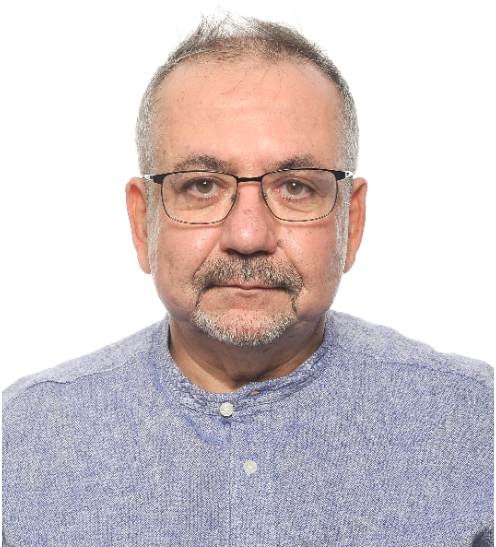
Prof. Darko Chudy
School of Medicine University of Zagreb, Croatia
Title: From Technology to Therapy: Contemporary Innovations in Neurosurgery
Abstract:
The difficult introduction of new therapies in clinical neuroscience is caused by the lack of an adequate animal model of the human brain that would imitate disorders of human-specific higher nervous functions. Therefore, in functional neurosurgery, target points for deep brain stimulation are often used according to those already described in the old literature dating back to the time of the emergence of functional neurosurgery. Studying the works of Tsubokawa and Yamamoto from the 90s, we began in 2011 the application of deep brain stimulation in patients with disorders of consciousness. The published results of our work and in scientific collaboration with Harvard University have shown that the predictive factors that have a higher probability of awakening to a conscious state are: age, better CRC-R score, preservation of the gray matter of the brain, preservation of the striatum and cerebellum. The cause of the disorder of consciousness, ischemia or neurotrauma, are not predictive factors. In addition to the reintroduction of deep brain stimulation in altered states of consciousness for the purposes of stereotactic surgeries, we have developed a new robotic system RONNA (Robotic NeuroNavigation), which has its advantages over similar Neurosurgical robots that are used in stereotactic surgeries. We have been using RONNA in stereotactic surgeries since 2016. It is currently in the development phase of a new, sixth prototype that meets the CE mark criteria. This robot also has its advantages over stereotactic frames, especially for operations in the posterior cranial fossa. And the current development of medical equipment in the world clearly favors robotic solutions over existing stereotactic frames.
Biography:
Darko Chudy, born on February 8, 1962, in Zagreb, Croatia, is a neurosurgeon specializing in stereotactic and functional neurosurgery. Dr. Chudy currently serves as Head of the Department of Neurooncology and Functional Neurosurgery at University Hospital Dubrava in Zagreb. His professional address is the Department of Neurosurgery, University Hospital Dubrava, School of Medicine, University of Zagreb.
Dr. Chudy completed his medical degree in 1988 at the School of Medicine, University of Zagreb. Following his internship at the University Clinical Hospital Center Zagreb – Rebro in 1989, he began his specialization in neurosurgery, which he pursued from 1992 to 1997. After completing his residency, he worked as a neurosurgeon at the Department of Neurosurgery at the University Clinical Hospital Center Zagreb from 1997 until 2007. That same year he was appointed Head of the Department of Neurosurgery at Clinical Hospital Dubrava.
His international training includes several visiting physician positions at distinguished European centers: Cologne University with Prof. V. Sturm (1994), Sophiahemmet Hospital in Stockholm with Prof. L. Laitinen (1996), Ankara University with Prof. Y. Campolat (2001), and La Timone Hospital in Marseille with Prof. J. Regis (2004). In addition to his clinical work, he contributed significantly to medical education, serving as a lecturer in functional neurosurgery and radiosurgery at the University of Maribor’s Medical School, Slovinia from 2009 to 2014. Since 2011, he has been an affiliated associate professor at the Medical School University of Washington in Seattle.
Dr. Chudy’s academic career began in the Department of Anatomy at the School of Medicine, University of Zagreb, where he was a Research Associate from 1984 to 1988 and later an Assistant in the Section of Neuroanatomy until 1992. He earned his Ph.D. in 2000 and was subsequently appointed Assistant Professor in 2013, Professor in 2020, and Full Professor in 2025 at the University of Zagreb.
His principal professional and scientific focus lies in stereotactic and functional neurosurgery, particularly in the treatment of movement disorders, chronic pain, and epilepsy. He introduced several advanced procedures in Croatia, including stereotactic biopsy in 1995 and, between 1997 and 2004, pallidotomy, deep brain stimulation for movement disorders, spinal cord stimulation, DREZ lesioning, and stereo-EEG implantation.
Dr. Chudy has led and participated in several major scientific and technological projects. From 2021 to 2025, he was the principal investigator for a Croatian Science Foundation project on Deep Brain Stimulation in Disorders of Consciousness. He also led a project on robotic systems for stereotactic neuronavigation funded by the Adris Foundation (2020–2022). As a project associate, he contributed to the development of the NERO neurosurgical robot and to the Scientific Centre of Excellence for Neuroscience, both supported by European Regional Development Fund grants. He is married and the father of four children.