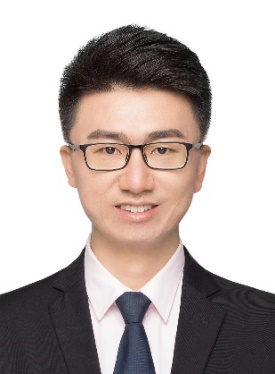
Prof. Peifeng Gao
Lanzhou University, China
Title: Study on Elastoplastic Multiscale Mechanical Behavior of Superconducting Magnet Composite Structures under Extreme Service Conditions
Abstract:
Rare-earth barium copper oxide (REBCO) coated conductor (CC) tapes demonstrate significant promise for high-field applications. REBCO superconducting magnets typically operate under extreme conditions including cryogenic temperature (4.2 K), high current (~400 A), and strong magnetic field (>20 T). In impregnated REBCO superconducting windings, the weak c-axis strength of REBCO CC tapes makes delamination - induced by thermal mismatch stress and Lorentz forces - a critical threat to operational stability. While impregnated REBCO superconducting magnets consist of multi-layer components with distinct material properties, including both linear elastic materials and elastoplastic nonlinear materials, their constituent materials exhibit markedly different stress states under combined cryogenic temperatures and intense electromagnetic fields. Current numerical modeling approaches primarily employ two methodologies: homogenized models and refined models. Whereas homogenized models enable efficient computation of global physical fields but sacrifice local interfacial delamination details, refined models achieve high-resolution analysis while demanding substantial computational resources. To address this efficiency-accuracy dilemma, this study develops a two-dimensional axisymmetric elastoplastic concurrent multiscale model incorporating a bilinear cohesive zone model (CZM) to investigate the mechanical properties and interfacial failure behaviors of REBCO superconducting coils under cryogenic electromagnetic conditions. The proposed framework follows a three-stage implementation: First, macro-scale electromagnetic-thermal-mechanical properties are estimated through composite homogenization theory to establish the homogenized superconducting coil model based on the Hill criterion. Subsequently, potential failure zones are identified at the macro-scale using quadratic failure criteria and replaced with CZM-defined refined submodels that capture delamination mechanisms. Finally, multiscale coupling is achieved through interface connectivity. Validation through comparative analysis with fully refined models confirms the computational efficiency of the concurrent multiscale model while maintaining accuracy in simulating delamination behaviors during both cooling and electromagnetic excitation processes.
Biography:
Peifeng Gao, a full Professor at Lanzhou University, obtained his Ph.D. in Engineering from Lanzhou University in 2017. His research focuses on mechanics of superconducting composite structures, experimental characterization under extreme conditions, and multiscale high-performance numerical computation methods.
He has published over 40 SCI-indexed papers, including 2 “Best Paper Award” from Superconductivity, 1 “ESI Highly Cited Paper”, 1 shortlisted for the “ZwickRoell Science Award” and 1 journal cover paper. His intellectual property portfolio includes 11 granted invention patents and 4 registered software copyrights. He has presided over 3 NSFC projects, led 3 China Postdoctoral Science Foundation projects, participated as a key member in 1 NSFC Key Program and 1 National Key R&D Program. In 2025, he was honored as an Excellent Young Scientist Award of MSAM in 2025, and a JSPS Fellow (Japan) and Longyuan Youth Talent (Gansu Province) in 2024. He serves as an editorial board member for 6 journals, and acts as a reviewer for over 10 journals in superconductivity and mechanics.