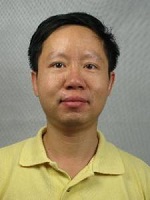
Prof. Geng Wu
Shanghai Jiao Tong University, China
Title: Targeted Inhibition of Colorectal Carcinoma Using a Designed CEA-Binding Protein to Deliver p53 Protein and TCF/LEF Transcription Factor Decoy DNA
Abstract:
Colorectal carcinoma (CRC) is characterized by mutations in p53 and the Wnt signaling pathway, and immunotherapy has shown limited efficacy in microsatellite-stable CRC. Here, CEABP1, a binding protein for the CRC biomarker carcinoembryonic antigen (CEA), was designed de novo through the AI-based computational methods RFDiffusion/ProteinMPNN and stringent in silico selection, for targeted delivery of purified p53 protein and transcription factor T-cell factor (TCF)/lymphoid enhancer-binding factor (LEF) transcription factor decoy (TFD) DNA into CRC cells. The cell-penetrating peptide (CPP) p28 was employed to deliver the p28-p53-CEABP1 protein, which significantly enhanced p53’s inhibition of CRC cell proliferation and xenograft tumor growth. Codelivery of the p14ARF protein together with p53 prolonged the effective antitumor duration of p53. In addition, the DNA binding domain of Max was fused with CPP and CEABP1 to deliver TCF/LEF TFD DNA, comprising concatenated consensus binding motifs for TCF/LEF and Max, into CRC cells to inhibit Wnt target gene transcription, leading to marked suppression of CRC cell proliferation and xenograft tumor growth. These findings paved the way for the development of precision anticancer therapeutics using designed binding proteins of tumor biomarkers for targeted delivery of tumor suppressor proteins and TFD DNA.
Biography:
In 1997, he earned his bachelor's degree from the University of Science and Technology of China and completed his Ph.D. at Princeton University in 2001. From 2001 to 2003 and from 2003 to 2008, he conducted postdoctoral research at Memorial Sloan Kettering Cancer Center and Children's Hospital Boston, respectively. In 2008, he became a professor at Shanghai Jiao Tong University. His present research interest is redesign and de novo design of anticancer proteins and small DNA. As the corresponding author, he has published papers in International Journal of Molecular Sciences (two papers in 2025), Nucleic Acids Research (2024), Protein Science (2023), Nature Catalysis (2022), Nature Communications (2013, 2017, 2018, 2022), Journal of Molecular Biology (2021), Cell Discovery (2015, 2016, 2017), and Cell Research (2012). He has been received honors including Shanghai Oriental Scholar, the Oriental Scholar Tracking Program, the Dawn Plan, the Pujiang Talent Program, and the New Century Excellent Talents Award from the Ministry of Education. His students have also won the Shanghai Outstanding Doctoral Dissertation Award.