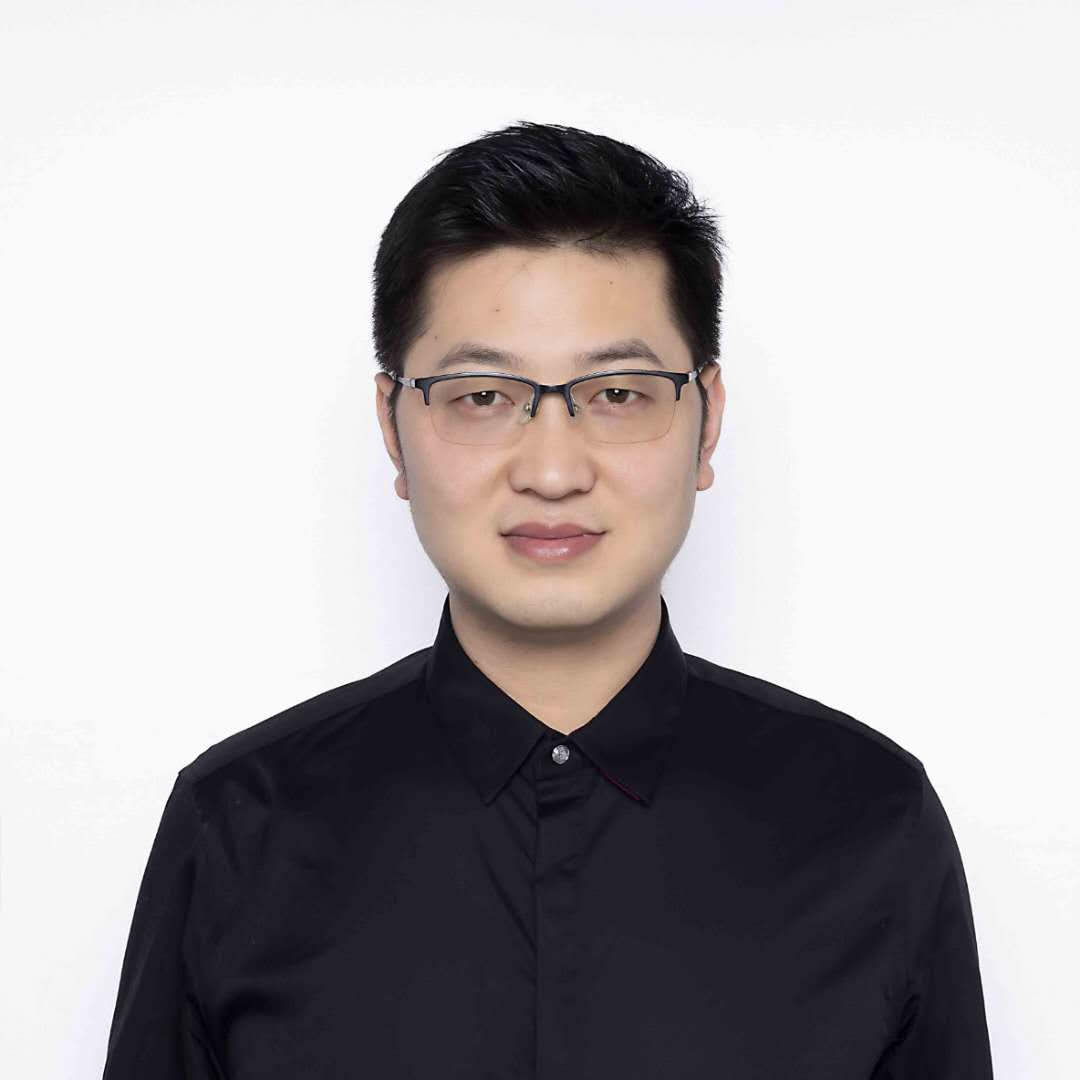
Prof. Zhaoyang Zhang
School of Electronic Science and Engineering, Xi’an Jiaotong University, China
Title: All-optically reconfigurable photonic lattices
Abstract:
Electromagnetically induced transparency (EIT) is a quantum interference phenomenon that suppresses resonant absorption, rendering the medium effectively transparent to a probe field when a strong coherent coupling field is applied to a linked transition. At the same time, EIT can significantly enhance and tailor the refractive index experienced by the probe field, affecting both its real and imaginary components. When the intensity of the coupling field is periodically modulated in space, the probe beam perceives a periodically varying refractive index under EIT conditions, which signifies the creation of a waveguide array. Because the atomic medium responds almost instantaneously to adjustments of the parameters that govern EIT, such electromagnetically induced photonic lattices can be reconfigured in situ. Taking advantage of the versatile properties of coherently prepared multilevel atomic media, we experimentally demonstrate novel dynamical behaviors of a laser beam propagating through spatially extended electromagnetically induced photonic lattices with tunable band structures, implemented in coherently-prepared rubidium atomic vapors.
Biography:
Zhaoyang Zhang is a Professor in the School of Electronic Science and Engineering, Xi’an Jiaotong University, China. He has been engaged in the research of atomic physics, quantum optics, nonlinear optics, and optical properties of photonic lattices in multi-level atomic systems. Recently, he mainly works on dynamics of light in instantaneously reconfigurable electromagnetically induced photonic lattices based on atomic coherence. He has been the Principle Investigator of National Nature Science Foundation for Excellent Young Scholars, and National Key Research & Development Project for Young Scientists, etc.