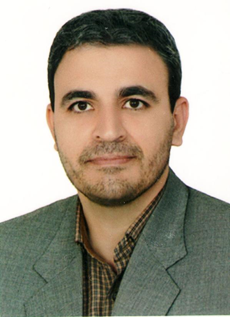
Assistant Professor Javad Karimi
Shiraz University, Iran
Title: Green-Synthesized Carbon Quantum Dots: From Sustainable Nanomaterial Design to Photocatalytic Environmental Applications
Abstract:
Carbon quantum dots (CQDs) have attracted considerable interest as promising nanomaterials because of their distinctive optical properties, tunable fluorescence, good photostability, water dispersibility, and relatively low toxicity. Growing interest in sustainable nanotechnology has also encouraged the development of greener synthesis approaches using natural carbon sources, particularly plant extracts, fruit residues, and agricultural by-products. Such approaches provide an opportunity to produce functional nanomaterials while making better use of renewable biological resources. The properties and performance of CQDs are strongly influenced by the nature of the carbon precursor and the conditions used during synthesis. Understanding these relationships is essential for tailoring their structural, surface, and optical characteristics to specific applications. Of particular interest is their role in photocatalytic systems, where CQDs can contribute to light absorption, charge separation, and reactive oxygen species generation. These properties offer considerable potential for environmental applications, including the degradation of organic pollutants, removal of emerging contaminants, and wastewater treatment. Despite these promising prospects, several challenges remain, particularly in controlling particle size and surface chemistry, ensuring reproducibility, evaluating environmental safety, and scaling up production. Addressing these issues will be important for translating laboratory findings into practical applications. Overall, green-synthesized CQDs represent a promising direction in sustainable nanomaterial development, with considerable potential to support more efficient and environmentally responsible photocatalytic technologies.
Keywords: Carbon quantum dots; Green synthesis; Biomass-derived nanomaterials; Photocatalysis; Environmental remediation; Emerging contaminants.
Biography:
Dr. Javad Karimi is an Assistant Professor of Plant Physiology at Shiraz University, Iran. His research is mainly concerned with how plants respond to environmental stress, particularly exposure to micro- and nanoplastics, heavy metals, and other environmental pollutants. Much of his work examines the physiological and biochemical changes that occur under stress, as well as the potential of biological resources to reduce their harmful effects on plants.
He is also interested in the use of cyanobacteria, especially Arthrospira platensis (Spirulina), and plant-derived compounds as natural approaches to improving plant stress tolerance. Alongside his work in plant science, he has developed a growing interest in green nanotechnology, particularly the synthesis and environmental applications of carbon quantum dots and other functional nanomaterials.
His research brings together plant physiology, environmental science, and nanotechnology, with a broader aim of exploring practical and sustainable solutions to environmental problems. He has published research articles in international scientific journals and is interested in building research collaborations that connect these fields and encourage new interdisciplinary approaches.