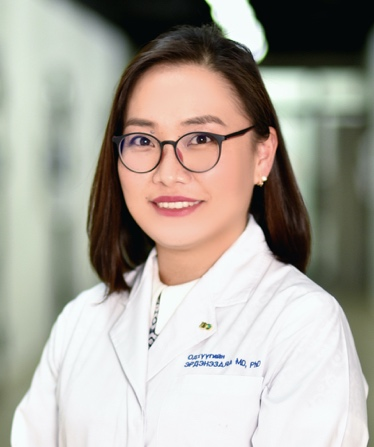
Dr. ERDENEZAYA ODKHUU
Department of Anatomy, School of Biomedicine, Mongolian National University of Medical Sciences, Mongolia
Title: Molecular Mechanisms of Salidroside in Bone Remodeling
Abstract:
Bone remodeling is a complex process regulated by the coordinated activity of osteoclasts and osteoblasts. Under physiological and pathological conditions, this balance can become dysregulated. Osteoporosis, a disease driven by an imbalance between bone-forming and bone-resorbing cells, has emerged as one of the most pressing public health problems worldwide. Consequently, there is growing interest in natural products that may restore this balance, and in the molecular mechanisms through which they act.
Salidroside is a phenylpropanoid glycoside extracted mainly from Rhodiola species, which are distributed across Eurasia. In traditional medicine, Rhodiola has been widely used to treat cardiovascular and central nervous system disorders, infections, and osteoporosis, and in Mongolia it has also long been used to treat bone fractures.
Salidroside has anti-hypoxic, anti-inflammatory, antioxidant, and anti-osteoporotic effects, among others. Its mechanisms in bone remodeling and regeneration, however, require more detailed investigation. Here, we review the traditional applications of salidroside-containing plants, the pharmacological effects and development prospects of salidroside, and recent advances in understanding its molecular mechanisms in bone remodeling.
In osteoblast lineage cells, salidroside promotes osteogenic differentiation through several converging pathways: activation of BMP-2 and AMPK signaling; enhanced WNT3A and β-catenin expression in adipose-derived stromal cells; and Wnt/BMP activation together with suppression of PPARγ-mediated adipogenesis through the MAPK pathway. Through antioxidant and anti-hypoxic signaling, salidroside mitigates simulated microgravity-induced bone loss by activating the Nrf2/HO-1 pathway. It also reduces intracellular reactive oxygen species and the osteoclast-inducing factors RANKL and IL-6 in oxidatively stressed osteoblastic cells, and improves trabecular microarchitecture in ovariectomized mice. In addition, it counteracts hypoxia-induced osteoblast damage and bone loss via the HIF-1α pathway, with improved trabecular microarchitecture and bone mineral density in the distal femur.
In osteoclast regulation, salidroside directly inhibits RANKL-induced osteoclast formation in RAW 264.7 cells, suppressing late p65 NFκB activation and thereby the expression of the key transcription factors c-Fos and NFATc1. It also raises the OPG/RANKL ratio in ovariectomized diabetic rats and inhibits osteoclast differentiation indirectly through osteoblast paracrine signaling, downregulating HIF-1α-dependent RANKL, VEGF, IL-6, and ANGPTL4.
Together, the evidence indicates that salidroside promotes bone remodeling, osteoblast activation, and bone regeneration, and suppresses osteoclast-driven resorption both directly, through NFκB/c-Fos/NFATc1 inhibition in osteoclast precursors, and indirectly, through osteoblast-mediated mechanisms. It is therefore a promising candidate for drug development and bone regeneration engineering, although most evidence comes from rodent and cell-culture studies, and clinical validation is still needed.
Key words
molecular mechanisms, bone remodeling, therapeutic potential, Salidroside, Rhodiola
Biography:
Education and Qualification
2010.04 PhD, Aichi Medical University, Nagakute, Aichi, Nagakute, Japan
Thema: Inhibition of receptor activator of nuclear factor-κB ligand (RANKL)-induced osteoclast formation by pyrroloquinoline quinine (PQQ)
2007.06 MSc, Health Sciences University of Mongolia, Ulaanbaatar
Major: Human Anatomy, Thema: The specificity of thymus gland vascularization in human fetus and child in Mongolia
2005.06 MD, Health Sciences University of Mongolia, Ulaanbaatar
Employment
2019.09- Senior lecturer Department of Anatomy,
School of Biomedicine, MNUMS
2021.11-2026.09 Researcher Cell biology laboratory,
Institute of Bio Medical Sciences, MNUMS
2015.09-2019.09 Lecturer Department of Anatomy,
School of Biomedicine, MNUMS
2014.04-2015.09 Assistant Professor Aichi Medical University, Nagakute, Japan
2010.04-2014.03 Graduate student Aichi Medical University, Nagakute, Japan
2007.09-2010.03 Assistant lecturer Department of Anatomy, School of Biomedicine, MNUMS
2005.09-2007.09 Lecturer Department of Morphology, “Etugen” university.