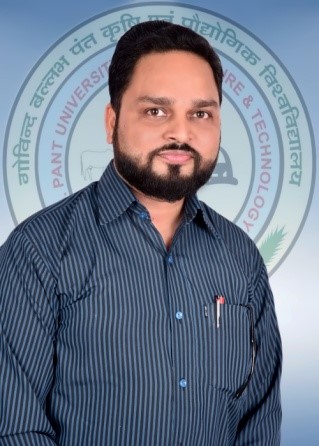
Prof. Amit Kesarwani
Department of Agronomy, College of Agriculture, Govind Ballabh Pant University of Agriculture and Technology, Pantnagar, India
Title: Plant-Derived Weed Suppressants and Mulch-Based Technologies: Emerging Approaches for Climate-Resilient and Sustainable Food Production
Abstract:
Weeds present
a major threat to global agricultural productivity, accounting for up to 37% of
crop losses in India alone. Heavy reliance on synthetic herbicides has
triggered widespread resistance development, environmental degradation, and
health hazards. Sustainable paradigms such as Natural Farming emphasize
non-chemical, ecological interventions. This manuscript synthesizes mechanisms
and research evidence on botanical aqueous extracts and mulching as
eco-friendly weed control strategies. Botanical extracts leverage natural
allelochemicals (e.g., sorgoleone, juglone) to disrupt weed
germination, cellular division, and photosynthetic pathways. Concurrently,
organic and live mulches create physical light barriers while improving soil
moisture, buffering thermal extremes, and suppressing weed biomass by 50%–95%.
Experimental evaluations demonstrate high weed control efficiencies (WCE) and
improved yields across major field crops such as cotton, maize, soybean, and
pigeonpea. Botanical extracts offer a sustainable
approach to weed management by converting unwanted weeds into natural
weed-control agents. Many weeds contain allelopathic compounds such as
phenolics, alkaloids, flavonoids and terpenoids. Using weed biomass as
botanical herbicide can reduce cost for weed management and contribute to the
development of environmentally friendly crop production systems
Integrating botanical extracts and mulching within Natural Farming offers a
resilient, economically viable framework for sustainable weed management.
However, selecting an appropriate concentration is
important for achieving effective weed suppression while minimizing the risk of
adverse effects, highlighting the potential of botanical extracts as a safer
and sustainable weed management option.
Keywords: botanical extracts,
allelopathy, weeds, natural farming, organic farming, sustainable agriculture
Biography:
Dr. Amit Kesarwani is a teacher, innovator, career consultant and working as an Assistant
Professor in College of Agriculture (Agronomy) at Govind Ballabh Pant
University of Agriculture and Technology, Pantnagar, Uttarakhand. He is also
Visiting Fellow at Western Sydney University, Australia. The core of his
interest has been exploring input efficient agriculture technology and
sustainable farming practice. He pursued his PhD from National Chung Hsing
University, Taiwan under Ministry of Education Fellowship, Taiwan and recipient
of Junior Research Fellowship during Masters too. Dr. Kesarwani serves as a board member of the various international
journal and society, further shaping the future of agriculture sciences
globally.