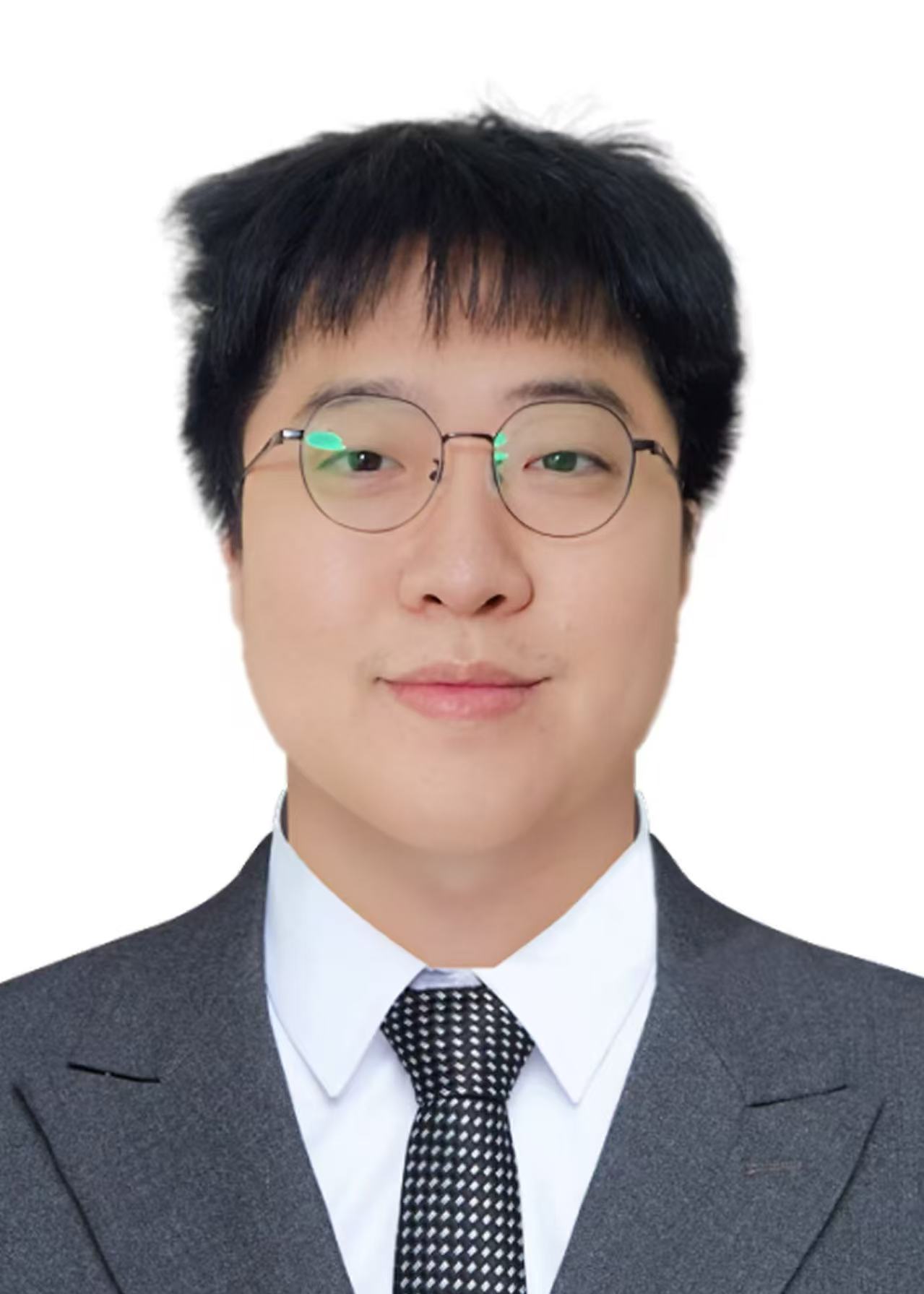
Dr. Jie Li
Taylor’s University, Malaysia
Title: Executive Keynote Briefing: Computational Oncology & Quantum Machine Learning
Abstract:
Context
& Overview: This executive summary condenses the 9-slide keynote presentation
prepared for the 6th International Conference on Cancer Therapy and
Translational Medicine (CTTM 2026, Kunming). It bridges Dr. Li Jie's published
research in continuous data cleaning and lightweight convolutional neural
networks (CNNs) with emerging hybrid quantum-classical frameworks in digital
histopathology and radiation oncology.
1. Institutional Research Foundation &
Data Quality Bottlenecks
• Taylor's Impact Lab Research Pillars: The Digital Health & Medical Advancement Impact Lab spans four
core thrusts: (1) Diagnostic AI & 3D intensity imaging for stainless
histopathology; (2) Mathematics in continuous data cleaning; (3) Smart IoT/UAV
medicine delivery; and (4) Open benchmark datasets on Harvard Dataverse.
• Clinical Histopathology Noise: Digital
whole-slide colon histopathology exhibits >90% non-biological feature noise
caused by microtome tearing, illumination variations, and inter-hospital
H&E staining drifts. Standard one-time preprocessing fails; iterative
continuous cleaning (ICRAIE 2025) and statistical verification are
mathematically proven prerequisites to prevent deep models from memorizing
laboratory preparation artifacts.
2. Classical Deep Learning: Architecture
Efficiency vs. Overfitting
A systematic
evaluation of CNN architectures (Digital Health 2026; Frontiers in Oncology
2025) demonstrates that heavyweight models (ResNet-50, DenseNet, 25M–50M+
parameters) face severe over-parameterization risks and inference latencies in
digital pathology scanners. Tailored lightweight CNN architectures achieve
clinical-grade accuracy while slashing computational overhead, enabling
seamless deployment on point-of-care hospital edge workstations.
3. Quantum Machine Learning Benchmarks &
Clinical Translation
|
Model / Architecture
|
Paradigm
|
PathMNIST ACC
|
OrganAMNIST
|
Key Technical Trade-off
|
|
ResNet-18
|
Classical Deep CNN
|
90.70%
|
93.50%
|
Standard residual baseline; requires full GPU
|
|
ResNet-50
|
Classical Deep CNN
|
91.10%
|
93.50%
|
Deeper capacity but higher over-fitting risk
|
|
Google AutoML Vision
|
Classical Automated NAS
|
72.80%
|
88.60%
|
Generic search underperforms on histology textures
|
|
IBM 127-Qubit Eagle
|
Pure Quantum (NISQ)
|
37.23%
|
N/A
|
Severe decoherence & noise on unmitigated
hardware
|
|
HQCNN
(4-Qubit VQC)
|
Hybrid Quantum-Classical
|
99.91%*
|
97.99%
|
Quantum Fourier attention captures global tissue
context
|
*Binary classification benchmark on colorectal adenocarcinoma histopathology (Shahjalal et al., arXiv 2025).
• Real-World Radiation Oncology Case Study (USC ISI & Keck Medicine): Translational collaboration demonstrated that QuFeX (Quantum Feature Extraction + U-Net) reduces model parameters by 6× (250K vs. 1.5M) while boosting organ boundary segmentation accuracy by +7%. This capability accelerates contouring workflows from multiple days to a single clinic visit, enabling daily adaptive radiation therapy.
• Empirical Rigor & 50-Qubit Threshold (Cascade Quantum 2026): Rigorous evaluations across WDBC, TCGA, and MedMNIST indicate no quantum advantage on low-dimensional data (Q_dataset < 50 qubits), as AutoML classical baselines match quantum parity. Genuine quantum utility requires high-dimensional multi-omics, 3D volumetric scans, and hardware error suppression.
4. Four-Stage Translational Roadmap & Concluding Takeaway
The keynote closes with a structured 4-phase clinical translation pathway: (1) Standardized continuous cleaning to secure authentic input baselines; (2) Hybrid quantum-classical co-design coupling lightweight CNNs with 4-to-16 qubit variational circuits; (3) Noise mitigation & error extrapolation on physical NISQ processors; and (4) Multi-center prospective clinical trials for biopsy triaging and radiation planning.
Conclusion: Advancing computational oncology from laboratory experimentation to clinical deployment demands combining rigorous, continuous data engineering with parameter-efficient hybrid architectures. As high-dimensional omics and spatial imaging mature, hybrid quantum-classical systems present a transformative frontier for personalized, ultra-precise cancer diagnostics.
Biography:
Dr. Li Jie is an academic and researcher in Computer Science, currently serving as a Tenure Lecturer of Bachelor and Master programmes at the School of Computer Science, Taylor’s University. At the meantime, he works as the researcher in Digital Health and Medical Advancement Impact Lab at Taylor’s University. His academic specialization covers medical imaging, image processing, drone technology, and the Internet of Things (IoT). Dr. Li Jie’s primary research directions include medical image processing, multi-modal structure design for early diagnosis based on meta-analysis, mathematics in data cleaning, and real-world AI applications. His work heavily targets AI-driven early diagnosis of colon cancer using Convolutional Neural Network (CNN) architectures, lightweight models, histopathology image augmentation pipelines, continuous data cleaning techniques, and 3D intensity imaging in multiple high impact journals such as Digital Health, Frontiers in Oncology, etc. His earlier research explored smart healthcare applications, including drone- and IoT-based medicine delivery systems for elderly care centers. He also serves as the key-note and session speakers in international conferences and as the editorial member in multiple international journals.