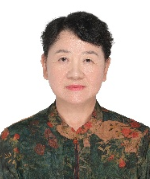
Prof. Wenjing Tian
State Key Laboratory of Supramolecular Structure and Materials, Jilin University, China
Title: Self-assembled CPL Aggregates based on 9,10-distyrylanthracene derivatives
Abstract:
Forming
long-range ordered micro-/nanostructures through self-assembly is a widely used
strategy to achieve chirality amplification in circularly polarized
luminescence (CPL) materials. Meanwhile, aggregation-induced emission (AIE)
molecules provide a new approach to overcome the low fluorescence quantum
efficiency commonly observed in aggregated states. However, due to their
intrinsically twisted molecular conformations, most AIE molecules do not easily
form π–π stacking structures, and the regulation of their properties as well as
the investigation of the underlying mechanisms remain challenging. Based on
our previous work, [1-3] we selected the 9,10-distyrylanthracene (DSA) structural unit for molecular modification. Under aqueous solvent
assembly conditions, equivalent hydrophilic–hydrophobic interactions were
introduced on both sides of the molecule, and a DSA-centered CPL system was
successfully constructed through a “clamping-embedding” strategy. The system
not only exhibits relatively excellent chiral and luminescent properties, but
is also strongly influenced by the solvent environment. By varying the water
fraction, significant CPL amplification as well as multiple signal inversions
can be observed. Morphological characterization and single-crystal structure
analysis indicate that such variability most likely originates from differences
in the assembled structures under different environments, namely variations in
intermolecular interactions. In addition, in a water-free
tetrahydrofuran/methanol system, the molecule can also form assemblies with
diverse morphologies by tuning the solvent ratio, leading to distinct CPL
emissions. This work
provides valuable insights for expanding the AIE molecular platform for CPL
materials, constructing new intelligent chiral luminescent systems, and
understanding the mechanism of chirality generation and amplification in
aggregated states.[4]
[1] Feng. J, Gu. Z et al. 2021 J. Phys. Chem. C, 125,
21270.
[2] Gu. Z,
Ma. W et al. 2023 Macromol.
Rapid Commun., 44, 2300428.
[3] Gu. Z, Ma. W et al. 2023 J. Phys. Chem. Lett., 14, 6437.
[4] Wang.
M, Song. Y et al. 2026 Chem. Commun., 62, 3334.
Biography:
Wenjing Tian is currently a professor in College of Chemistry at Jilin University. She received her bachelor's degree in Physics at Jilin University in 1988 and Ph.D. in Polymer Physics at Changchun Institute of Applied Chemistry, Chinese Academy of Sciences in 1993. She later worked as a postdoc in Jilin University collaborating with Prof. Jiacong Shen. In January 1996, she joined Jilin University and launched her own research group. She has been engaged in organic polymer material science research for a long time, and has made important innovative achievements in the fields of organic polymer opto-electronic functional materials. She has published more than 290 papers in SCI journals, cited more than 7,000 times, and obtained 11 Chinese invention patents. She has presided over a number of key/surface projects of the National Nature Foundation. In 2002, as the main participant, the project "Basic Research on new organic electroluminescent materials" won the first prize of Natural Science Award in universities of the Ministry of Education; in 2014, the project "Basic Research on organic polymer optoelectronic functional materials" won the first prize of Natural Science Award of Jilin Province Science and Technology Award.