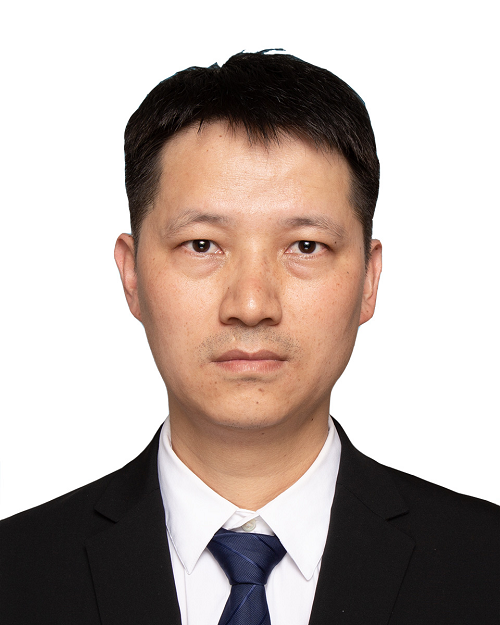
Associate Professor Zhili Peng
Yunnan University, China
Title: Hydrogen-Bonding-Induced Hierarchical Structure Engineering of Carbon Dots: From Particles to Clusters and Cluster Networks
Abstract:
Carbon
dots face two major challenges: aggregation-caused quenching in the solid state
and the lack of scalable synthesis for high-quality red-emitting materials.
This presentation summarizes our systematic efforts to address these issues
through hierarchical structure engineering enabled by precise surface hydrogen
bonding control. By tuning the density and types of surface functional groups,
we program the hierarchical assembly of carbon dots across multiple length
scales—from individual particles, to clusters, and ultimately to cluster
networks—establishing a comprehensive framework that links molecular-level
functional group engineering to macroscopic architectures.
Through
this approach, we discovered a hydrogen-bond-mediated self-assembly mechanism
governing the particle-to-cluster-to-cluster network transition, achieving
continuous emission tuning from blue to deep red across a 300 nm range. This
elucidates the physical origin of aggregation-induced emission in carbon dots
and validates our strategy for solid-state luminescent materials. Based on
these insights, we developed high-performance white LEDs with a record color
rendering index of 97, advanced information encryption systems, and
stimuli-responsive sensing platforms. Our work provides a comprehensive pathway
from surface functionality control to hierarchical assembly and device
applications, positioning carbon dots as next-generation optoelectronic
materials with precisely engineered architectures.

References:
(1) F. Zeng, C. Ji, Z. Xiang, L. Gao, W. Xu, Z. Peng*, Carbon 249 (2026) 121239.
(2) X. Yang, F. Zeng, Y. Duan, R. Li, Z.
Liu, Y. Xiang, S. Liu, Z. Peng*, L. Qiu*. Chem. Eng. J. 526
(2025) 171336.
(3) C. Ji, F. Zeng, W. Xu, M. Zhu, H.
Yu, H. Yang, Z. Peng*, Adv. Mater. 37 (2025) 2414450.
(4) W. Xu, F. Zeng, Q. Han, Z. Peng*, Coord. Chem. Rev. 498 (2024) 215469.
(5) Y. Jiang, T. Zhao, W. Xu; Z. Peng*, Carbon 219 (2024) 118838.
(6) C. Ji, W. Xu, Q. Han, T. Zhao, J.
Deng, Z. Peng*, Nano Energy 114 (2023) 108623.
(7) W. Xu, Q. Han, C. Ji, F. Zeng, X.
Zhang, J. Deng, C. Shi, Z. Peng*, Small 19 (2023) 2304123.
(8) C. Ji, Q. Han, Y. Zhou, J. Wu, W.
Shi, L. Gao, R. M. Leblanc, Z. Peng*, Carbon 192 (2022) 198.
Biography:
Dr. Zhili
Peng is an Associate Professor and Associate Dean at the School of Materials
and Energy, Yunnan University. He received his B.S. from the University of
Science and Technology of China (2009) and Ph.D. from the University of Miami,
USA (2014). He held academic positions at Miami Dade College, Florida
International University, and the University of Miami before joining Yunnan
University in 2018. His research focuses on functional carbon-based
nanomaterials, particularly the kilogram-scale synthesis, surface functionality
engineering, hierarchical structure assembly, and optoelectronic applications
of carbon dots. He has published over 50 SCI papers as corresponding/first
author in journals including Advanced Materials, Coordination Chemistry Reviews,
and Nano Energy, including several ESI highly cited papers and journal annual
articles, with >6,700 citations and an h-index of 38. He is the recipient of
the World's Top 2% Scientists Award (2025), Yunnan "Xingdian Yingcai"
Youth Talent, He serves as an Ad Hoc Reviewer for Nature Communications, Angewandte
Chemie, and other top journals.