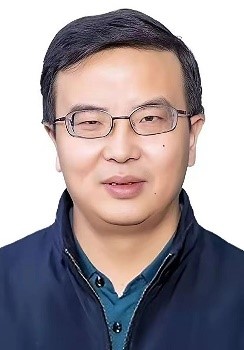
Prof. Zhengwen Yang
Kunming University of Science and Technology, China
Title: Design Principles, Reversible Luminescence Modulation, and Applications of External-field-induced Coloration Materials
Abstract:
Stimuli-responsive coloration materials refer to a class of smart materials that exhibit
reversible color variations under external stimuli, including light, heat,
electric fields, mechanical forces, and radiation (Figure 1). In recent years,
these materials have demonstrated great potential for applications in
information storage, anti-counterfeiting encryption, sensing and detection, and
intelligent displays.1-3 In this presentation, two types of
inorganic photochromic material systems with external-field-responsive
behaviors, including defect-mediated and metal-ion valence-state-change-driven
systems, were designed and developed through compositional regulation,
structural optimization, and controlled synthesis of inorganic color-changing
materials. Various characterization techniques, including X-ray photoelectron
spectroscopy, thermoluminescence spectroscopy, X-ray Absorption Near Edge
Structure, and positron annihilation lifetime spectroscopy, were employed to
systematically investigate the evolution of defect-state distributions and
metal cation valence states during external-field stimulation, thereby
elucidating the coloration mechanisms in different inorganic material systems.
By utilizing the reversible changes in photophysical properties during the
coloration process, the rare-earth-ion-related photoluminescence, persistent
luminescence, and radioluminescence modulation was achieved based on the
absorption change in different color states. The intrinsic correlations among
defect-state migration, energy-level reconstruction, and the evolution of the
coordination environment of luminescent centers were further revealed. Based on
the stimulus-dependent photochromic properties, the application potential of
inorganic coloration materials was demonstrated in various scenarios, including
fingerprint identification, optical data storage, anti-counterfeiting labeling,
and environmental monitoring.

References:
[1] Y Zi, Z Yang*, et al,
Force-light-heat stimulation-induced multicolor chromism and multifunctional
applications of europium tungstate phosphor, Nat Commun, 2025, 16, 6857.
[2] Z Xu*, Z Yang*, et al, Spatiotemporal
self‐encrypted interlock‐cascade‐hashing optical storage based on multicolor
photochromic lithographic array, Adv Mater, 2026, 38(9), e06247.
[3] Z Hu, Z Yang*, et al, Reversible
3D optical data storage and information encryption in photo-modulated
transparent glass medium, Light Sci Appl, 2021, 10(1), 140.
Biography:
Zhengwen Yang is currently a Professor and Doctoral Supervisor at the College of Materials Science and Engineering, Kunming University of Science and Technology, China. He also serves as the Deputy Dean of the School of Excellent Engineers at Kunming University of Science and Technology. He received his bachelor’s and master’s degrees from Jilin University in 2002 and 2005, respectively, and obtained his Ph.D. degree from Tsinghua University in 2009.
His research interests focus on the design, regulation, and application of luminescent materials, particularly the luminescence modulation and enhancement of rare-earth-ion-doped inorganic materials. He has led in several research projects, including National Natural Science Foundation of China projects and major science and technology programs in Yunnan province. He has published more than 180 SCI-indexed papers in internationally recognized journals, including Advanced Materials, Nature Communications, and Light: Science & Application.
Prof. Yang currently serves as an editorial board member of Scientific Reports and young editorial board member of Chinese Journal of Luminescence. He is also a committee member of several professional societies, including the Chinese Ceramic Society and the Chinese Rare Earth Society. He has been recognized with several honors, including being selected as a member of the Yunnan Xingdian Talent Program for Industrial Innovation Talents and the Yunnan Provincial Young and Middle-aged Academic and Technical Leader Program.