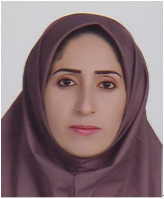
Prof. Masoumeh Ghalkhani
Shahid Rajaee Teacher Training University, Iran
Title: Why Every Electrochemist Should Understand Density Functional Theory
Abstract:
Electrochemical sensor research is entering a new stage in which understanding the molecular origins of sensor performance is becoming as important as developing new electrode materials. For many years, improvements in electrochemical sensors were achieved primarily through experimental optimization. While this empirical approach has produced numerous successful sensing platforms, it often provides limited insight into the fundamental interactions that govern sensitivity, selectivity, and electron-transfer processes.
In parallel with advances in nanomaterials, Density Functional Theory (DFT) has evolved into one of the most influential computational tools for interpreting electrochemical phenomena at the atomic scale. Increasingly, high-impact publications combine experimental measurements with DFT calculations to explain adsorption behavior, electronic interactions, active sites, and reaction mechanisms. As a result, experimental electrochemists are encountering computational results more frequently than ever before.
This keynote lecture is based on a simple but increasingly important premise: electrochemists do not need to perform DFT calculations themselves, but they should understand how to interpret DFT results and relate them to experimental observations. Rather than discussing mathematical formulations or computational procedures, this presentation centers on the practical interpretation of commonly reported DFT descriptors—namely adsorption energy, density of states, frontier molecular orbitals, charge transfer, and electrostatic potential. Subsequently, it demonstrates how these theoretical descriptors can be effectively correlated with key electrochemical measurements, including cyclic voltammetry, differential pulse voltammetry, and electrochemical impedance spectroscopy, as well as with performance indicators such as sensitivity, selectivity, and detection limits.
Drawing on representative examples from recent electrochemical sensor research, the lecture will illustrate how computational and experimental approaches complement one another in explaining sensor performance, guiding material selection, and supporting the rational development of advanced sensing platforms. The presentation will also discuss current challenges and emerging opportunities. Ultimately, this lecture seeks to provide experimental electrochemists with a practical framework for reading, evaluating, and interpreting DFT-assisted electrochemical research. Strengthening this shared scientific language will facilitate interdisciplinary collaboration and contribute to a more knowledge-driven approach to the design of next-generation electrochemical sensors.
Biography:
Dr. Masoumeh Ghalkhani began her career at the top university in Iran- Sharif University of Technology (SUT) where she obtained her M.Sc. (2005) and received her PhD in Electrochemistry (2010). In Sep. 2012, she was appointed Assistant Professor in Chemistry at Shahid Rajaee Teacher Training University, SRTTU, Iran. At present, she is an Associate Professor of Chemistry at SRTTU. Her current research interests include chemistry education, synthesis of nanomaterials and their application for electro-analytical chemistry, electro-chemical catalysis, fuel cells, supercapacitors, and sensors, mainly focused on the fabrication and application of modified electrodes and biosensors. She has published over 100 manuscripts related to electrochemical systems, catalysis, and inorganic chemistry that have garnered over 4511 citations.